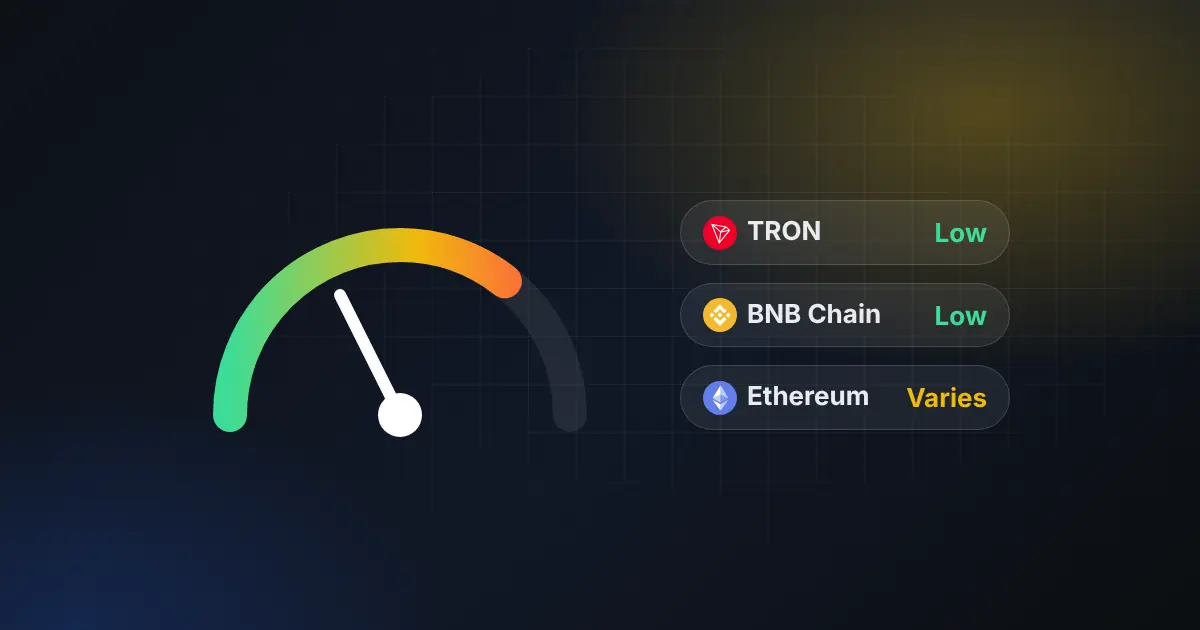
Every crypto transfer pays a small fee to the network that processes it. These fees are separate from any exchange fee, and they can change from minute to minute. Understanding them helps you avoid overpaying and avoid stuck transactions.
What network fees pay for
Blockchains have limited space in each block. Network fees reward the miners or validators who include your transaction and keep the network secure. When many people want to transact at once, fees rise as users compete for space.
Network fee vs exchange fee
| Network fee | Exchange fee | |
|---|---|---|
| Paid to | The blockchain's validators or miners | The exchange service |
| Who sets it | Network demand, and your wallet settings | The exchange |
| On Bitfilo | Your wallet pays it when you send a deposit | Included in the quote you see |
Why fees differ between networks
- Bitcoin fees depend on transaction size in bytes and current demand.
- Ethereum uses "gas": the more complex the transaction and the busier the network, the higher the cost. Token transfers cost more than plain ETH transfers.
- TRON, BNB Smart Chain and Solana are usually much cheaper for everyday transfers.
Five ways to pay less
- Choose a cheaper network when both sides support it, for example USDT on TRON or BNB Smart Chain instead of Ethereum.
- Send at quieter times. Fees on busy networks often drop outside peak hours.
- Batch your transfers. One larger transfer costs less in fees than several small ones.
- Use your wallet's recommended fee rather than the fastest option when you are not in a hurry.
- Swap inside your account. Swaps between balances on Bitfilo happen instantly with no network fee at all.
Do not set the fee too low
A fee far below the current market rate can leave your transaction pending for hours. If you are paying for an exchange, that could mean your deposit arrives after the rate lock ends. When timing matters, use the standard fee your wallet suggests.
Ready to swap?
Locked rate, fee included, exact payout shown before you confirm.
This article is for general information and is not financial, legal or tax advice.


